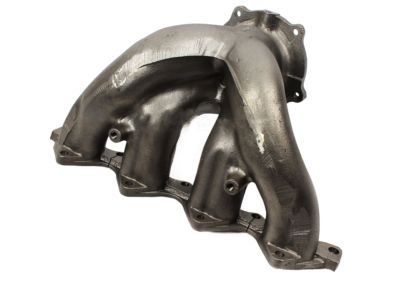
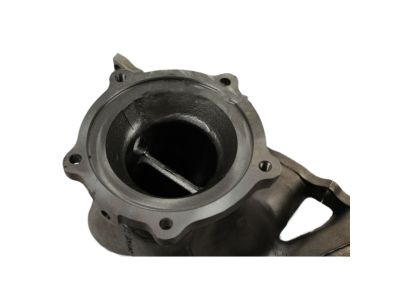
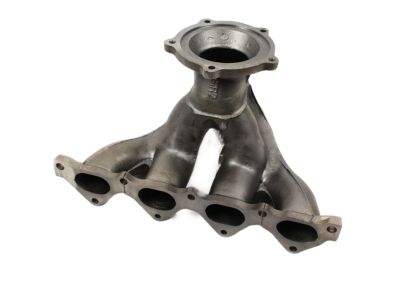
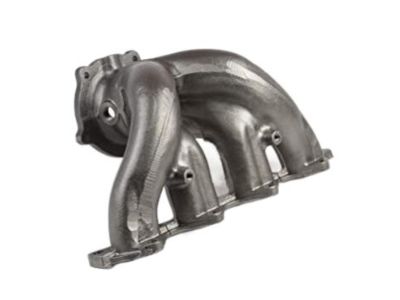
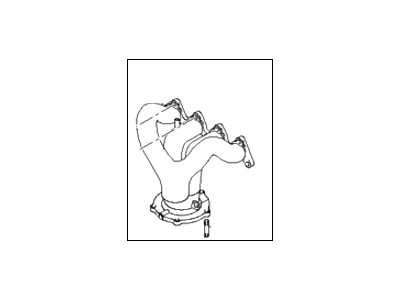
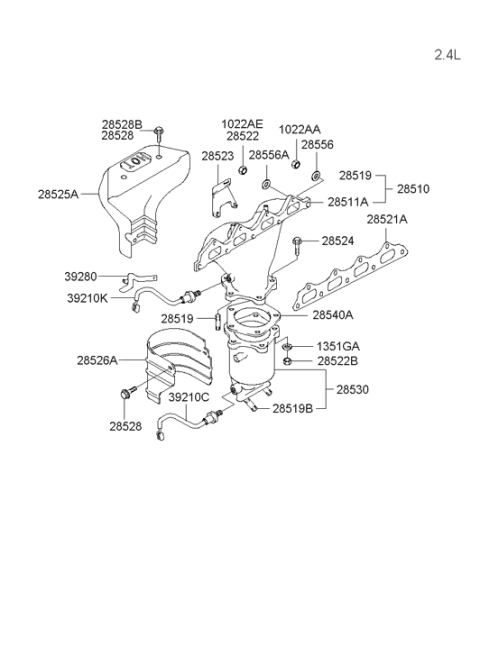
Disconnect the cable from the negative terminal of the battery. Spray penetrating oil on the exhaust manifold fasteners and allow it to soak in. If removing the rear exhaust manifold, raise the front of the vehicle and support it securely on jackstands, then remove the engine splash shield. Disconnect or remove the heated oxygen sensors from the manifold(s). Remove the bolts and the heat shield over the exhaust manifold. Remove the exhaust manifold brace, if equipped. Remove the nuts retaining the exhaust pipe(s) to the exhaust manifold(s) or catalytic converter(s). Unbolt the exhaust manifold(s) from the cylinder head(s), working from the ends toward the middle, and slip the manifold(s) off the mounting studs. Carefully inspect the manifold(s) and fasteners for cracks and damage. Use a scraper to remove all traces of old gasket material and carbon deposits from the manifold and cylinder head mating surfaces. If the gasket was leaking, check the manifold for warpage on the cylinder head mounting surface by placing a straightedge over the surface and trying to insert a feeler gauge; if the clearance exceeds the limit, have the manifold resurfaced at an automotive machine shop. Position a new gasket over the cylinder head studs, install the manifold(s), and thread the mounting nuts into place. Working from the center out, tighten the nuts to the specified torque. Reinstall the remaining parts in the reverse order of removal, using new gaskets when connecting the exhaust pipes. Run the engine and check for exhaust leaks.