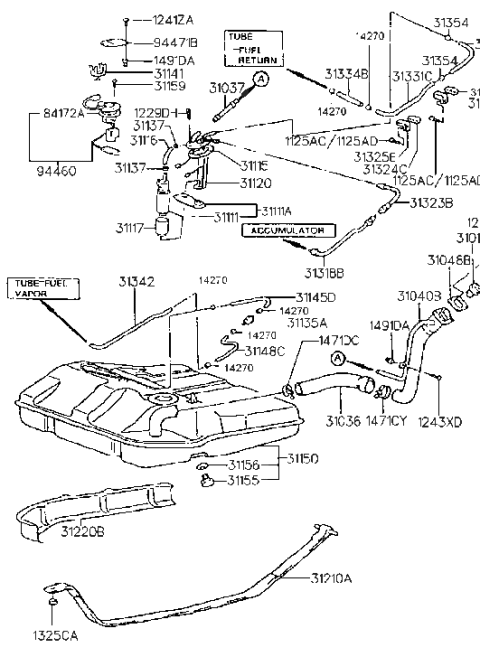
For carbureted models with a mechanical fuel pump, start by disconnecting the battery cable and removing the fuel tank filler cap to release pressure. Then, remove the air cleaner assembly and raise the front of the vehicle, securing it with jackstands. From underneath the engine, disconnect the fuel inlet, outlet, and return hoses from the fuel pump, and from above, remove the fuel pump mounting bolts. Carefully detach the fuel pump, gaskets, and insulator, scraping off old gasket material. Inspect the hoses and replace if necessary before installing with new gaskets. For fuel-injected models with an electric fuel pump, first relieve fuel system pressure and disconnect the negative battery cable. Depending on the model year, remove the fuel tank or the rear seat cushion to access the fuel pump. Proceed to remove the fuel pump assembly, disconnecting the fuel pump/fuel level sending unit electrical connector and the fuel supply line fitting. Remove the pump from the tank, making sure to angle it properly to avoid damaging the float arm. Inspect components for damage, then follow the reverse procedure for installation. For high-pressure fuel pumps in 2012 and later models, start by relieving fuel system pressure and disconnecting the pressure regulator electrical connector and the fuel supply line quick-connect fitting. Utilize special tools to remove the nut and high-pressure fuel pump, disconnect electrical connectors, remove the junction block and high-pressure fuel pipe, and then remove the pump from the cylinder head. Apply engine oil to the pump O-ring before installation and ensure proper torque on the bolts. Finally, start the engine and check for fuel leaks.