×
- Hello
- Login or Register
- Quick Links
- Live Chat
- Track Order
- Parts Availability
- RMA
- Help Center
- Contact Us
- Shop for
- Hyundai Parts
- Hyundai Accessories


My Garage
My Account
Cart
Genuine Hyundai Elantra Brake Master Cylinder
- Select Vehicle by Model
- Select Vehicle by VIN
Select Vehicle by Model
orMake
Model
Year
Select Vehicle by VIN
For the most accurate results, select vehicle by your VIN (Vehicle Identification Number).
31 Brake Master Cylinders found
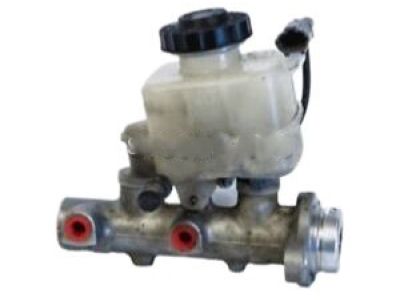
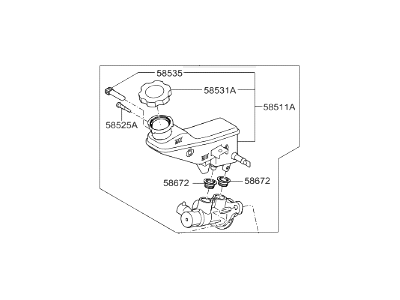

Hyundai Elantra Brake Master Cylinder Assembly
Part Number: 58510-F2400$374.71 MSRP: $531.08You Save: $156.37 (30%)Ships in 1-3 Business Days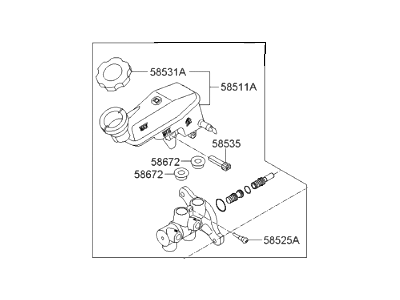

Hyundai Elantra Brake Master Cylinder Assembly
Part Number: 58510-3Y400$569.03 MSRP: $806.50You Save: $237.47 (30%)Ships in 1-3 Business DaysHyundai Elantra Brake Master Cylinder Assembly
Part Number: 58510-3Y500$531.09 MSRP: $752.73You Save: $221.64 (30%)Ships in 1-3 Business Days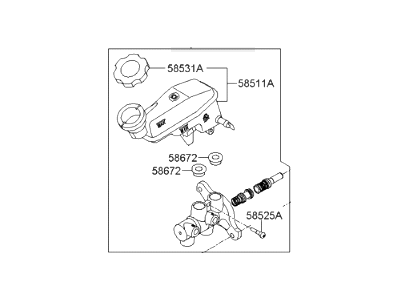

Hyundai Elantra Brake Master Cylinder Assembly
Part Number: 58510-3X420$569.03 MSRP: $806.50You Save: $237.47 (30%)Ships in 1-3 Business Days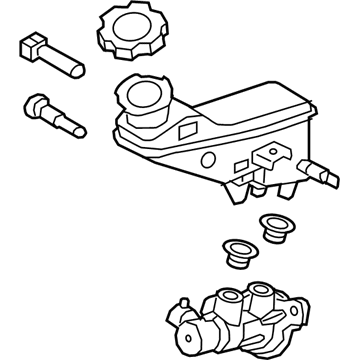
Hyundai Elantra Brake Master Cylinder Assembly
Part Number: 58510-F2CC0$362.64 MSRP: $513.97You Save: $151.33 (30%)Ships in 1-3 Business DaysHyundai Elantra Brake Master Cylinder Assembly
Part Number: 58510-3X400$569.03 MSRP: $806.50You Save: $237.47 (30%)Ships in 1-3 Business Days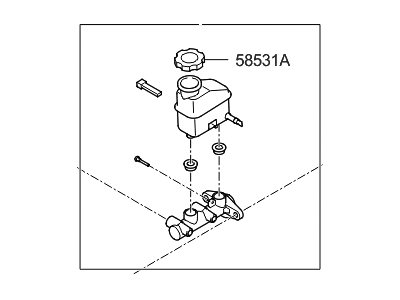

Hyundai Elantra Brake Master Cylinder Assembly
Part Number: 58510-2H300$569.03 MSRP: $806.50You Save: $237.47 (30%)Ships in 1-3 Business DaysHyundai Elantra Brake Master Cylinder Assembly
Part Number: 58510-3X500$531.09 MSRP: $752.73You Save: $221.64 (30%)Ships in 1-3 Business DaysHyundai Elantra Brake Master Cylinder Assembly
Part Number: 58510-F2500$342.72 MSRP: $485.74You Save: $143.02 (30%)Ships in 1-3 Business Days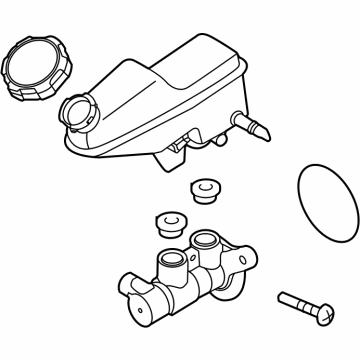

Hyundai Elantra Brake Master Cylinder Assembly
Part Number: 58510-AB440$432.11 MSRP: $612.44You Save: $180.33 (30%)Ships in 1-3 Business Days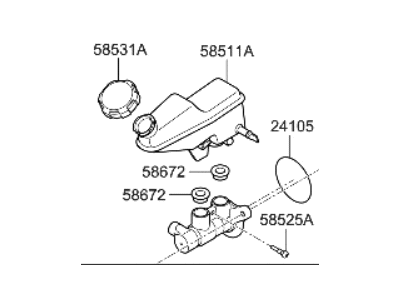

Hyundai Elantra Brake Master Cylinder Assembly
Part Number: 58510-AA440$418.82 MSRP: $593.60You Save: $174.78 (30%)Ships in 1-3 Business DaysHyundai Elantra Brake Master Cylinder Assembly
Part Number: 58510-3X520$476.80 MSRP: $675.77You Save: $198.97 (30%)Ships in 1-3 Business DaysHyundai Elantra Brake Master Cylinder Assembly
Part Number: 58510-2H000$531.09 MSRP: $752.73You Save: $221.64 (30%)Ships in 1-3 Business Days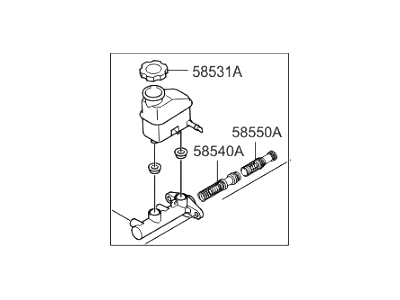
Hyundai Elantra Brake Master Cylinder Assembly
Part Number: 58510-2H500$569.03 MSRP: $806.50You Save: $237.47 (30%)Ships in 1-3 Business Days
Hyundai Elantra Brake Master Cylinder Assembly
Part Number: 58510-AA450$636.54 MSRP: $902.18You Save: $265.64 (30%)Ships in 1-3 Business Days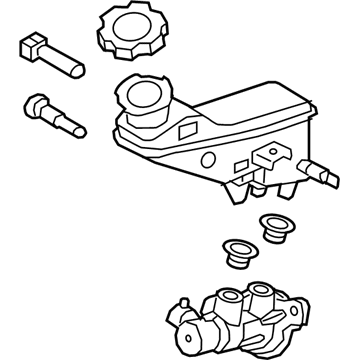
Hyundai Elantra Brake Master Cylinder Assembly
Part Number: 58510-F2CD0$322.67 MSRP: $453.34You Save: $130.67 (29%)Ships in 1-3 Business Days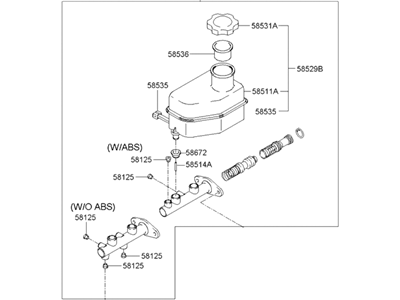

Hyundai Elantra Brake Master Cylinder Assembly
Part Number: 58510-2D200$449.13 MSRP: $636.56You Save: $187.43 (30%)Ships in 1-3 Business DaysHyundai Elantra Brake Master Cylinder Assembly
Part Number: 58510-2D500$502.22 MSRP: $711.81You Save: $209.59 (30%)Ships in 1-3 Business DaysHyundai Elantra Brake Master Cylinder Assembly
Part Number: 58510-2D100$368.58 MSRP: $522.39You Save: $153.81 (30%)Ships in 1-3 Business DaysHyundai Elantra Brake Master Cylinder Assembly
Part Number: 58510-2D300$412.14 MSRP: $584.13You Save: $171.99 (30%)Ships in 1-3 Business Days
| Page 1 of 2 |Next >
1-20 of 31 Results
Hyundai Elantra Brake Master Cylinder
The Hyundai Elantra Brake Master Cylinder transforms pedal pressure into hydraulic pressure, which allows the car to stop safely. Inside the Brake Master Cylinder, twin pistons slide within a cast iron or aluminum bore, whose seals and springs pressurize fluid for two separate circuits that have provided backup safety since 1967. Recent Hyundai models have the Brake Master Cylinder mounted in front of the vacuum booster, with an external plastic reservoir with O-rings sealing it in, but previously an integral metal reservoir with a bail cap was sometimes applied. Integral or external, the Brake Master Cylinder uses return springs and small ports to refill rapidly when the driver takes their foot off the brake pedal to prevent a low feel. If an Elantra develops a soft pedal, then you first rule out leaks or air elsewhere because a worn Brake Master Cylinder can also leak fluid past its end seal or even corrode inside if moisture gets in. Different generations of Hyundai Elantra shared the same dual-circuit concept, but trim changes were made from integral to detachable reservoirs, the main difference being felt in the ease of fluid inspection and reduction in weight. Regular fluid changes will keep the hydraulic heart of a Hyundai stopping system healthy, maintaining pedal firmness for every Elantra on the road.
If you are looking for affordable high-quality OEM Hyundai Elantra Brake Master Cylinder, then you have come to the prime place. Our website provides a large amount of genuine Hyundai Elantra Brake Master Cylinder at unbeatable prices. All our parts come backed with the manufacturer's warranty.
Hyundai Elantra Brake Master Cylinder Parts Questions & Experts Answers
- Q:How to remove and install the Brake Master Cylinder on Hyundai Elantra?Posted by Rolando M.A:The Brake Master Cylinder is located in the engine compartment, mounted to the power brake booster. Begin by removing the intake duct between the air filter housing and the throttle body. For 2011 and later 1.8L models and all 2013 and later models, the battery and Powertrain Control Module must be removed. Extract as much fluid as possible from the reservoir using a syringe or an old poultry baster, ensuring that the baster is not reused for food preparation. Place rags under the fluid fill points and prepare caps or plastic bags to cover the ends of the lines after disconnection, taking care to avoid paint damage from brake fluid. Loosen the fittings at the ends of the Brake Lines entering the Brake Master Cylinder using a flare-nut wrench, then remove the mounting nuts. Pull the brake lines slightly away from the Brake Master Cylinder and plug the ends to prevent contamination. Disconnect the electrical connector at the brake fluid level switch on the Brake Master Cylinder reservoir, then remove the nuts attaching the Brake Master Cylinder to the power booster, pulling the Brake Master Cylinder out of the engine compartment while being cautious not to spill fluid. Before installation, bench bleed the Brake Master Cylinder by mounting it in a vise and attaching bleeder tubes to the outlet ports, directing brake fluid back into the reservoir during bleeding. Fill the reservoir with the recommended brake fluid and slowly push the pistons into the Brake Master Cylinder using a large Phillips screwdriver to expel air into the reservoir, repeating until no air bubbles are present. Remove the bleed tubes one at a time, install plugs in the open ports, and then install the reservoir cap. Mount the Brake Master Cylinder over the studs on the power brake booster, tightening the attaching nuts only finger tight initially, and ensure a new O-ring is installed in the sleeve of the Brake Master Cylinder. Thread the brake line fittings into the Brake Master Cylinder, adjusting the position slightly for ease of threading without stripping the threads. Fully tighten the mounting nuts and brake line fittings, then fill the Brake Master Cylinder reservoir with fluid and bleed the Brake Master Cylinder by having an assistant depress the brake pedal while loosening the fitting to allow air and fluid to escape, repeating this on both fittings until the fluid is clear of air bubbles. Finally, bleed the entire brake system and carefully test the operation of the brake system before returning the vehicle to normal service.Answered by Hyundai Parts Specialist Enrique / Mar 04, 2024
Related Hyundai Elantra Parts
 Hyundai Elantra Brake Proportioning Valve
 Hyundai Elantra Brake Fluid Pump
 Hyundai Elantra Brake Fluid Level Sensor
 Hyundai Elantra Master Cylinder Repair Kit
 Hyundai Elantra Brake Booster
Browse by Year
2026 Brake Master Cylinder 2025 Brake Master Cylinder 2024 Brake Master Cylinder 2023 Brake Master Cylinder 2022 Brake Master Cylinder 2021 Brake Master Cylinder 2020 Brake Master Cylinder 2019 Brake Master Cylinder 2018 Brake Master Cylinder 2017 Brake Master Cylinder 2016 Brake Master Cylinder 2015 Brake Master Cylinder 2014 Brake Master Cylinder 2013 Brake Master Cylinder 2012 Brake Master Cylinder 2011 Brake Master Cylinder 2010 Brake Master Cylinder 2009 Brake Master Cylinder 2008 Brake Master Cylinder 2007 Brake Master Cylinder 2006 Brake Master Cylinder 2005 Brake Master Cylinder 2004 Brake Master Cylinder 2003 Brake Master Cylinder 2002 Brake Master Cylinder 2001 Brake Master Cylinder 2000 Brake Master Cylinder 1999 Brake Master Cylinder 1998 Brake Master Cylinder 1997 Brake Master Cylinder 1996 Brake Master Cylinder 1995 Brake Master Cylinder 1994 Brake Master Cylinder 1993 Brake Master Cylinder 1992 Brake Master Cylinder 1991 Brake Master Cylinder