×
- Hello
- Login or Register
- Quick Links
- Live Chat
- Track Order
- Parts Availability
- RMA
- Help Center
- Contact Us
- Shop for
- Hyundai Parts
- Hyundai Accessories


My Garage
My Account
Cart
Genuine 2008 Hyundai Santa Fe Starter Motor
Starter Ignition- Select Vehicle by Model
- Select Vehicle by VIN
Select Vehicle by Model
orMake
Model
Year
Select Vehicle by VIN
For the most accurate results, select vehicle by your VIN (Vehicle Identification Number).
7 Starter motors found
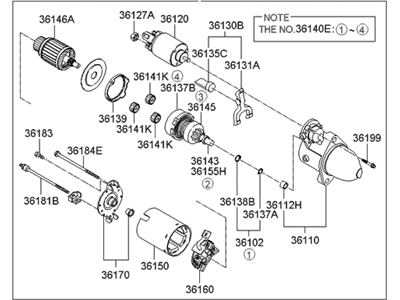

2008 Hyundai Santa Fe Starter Assembly
Part Number: 36100-3C150$396.72 MSRP: $562.27You Save: $165.55 (30%)Ships in 1-3 Business DaysProduct Specifications- Other Name: Starter
- Manufacturer Note: MANUFACTURER-REMY KOREA
- Replaces: 36100-3C180
- Part Code: 36100A
- Item Weight: 8.90 Pounds
- Item Dimensions: 22.4 x 18.7 x 0.7 inches
- Condition: New
- Fitment Type: Direct Replacement
- SKU: 36100-3C150
- Warranty: This genuine part is guaranteed by Hyundai's factory warranty.
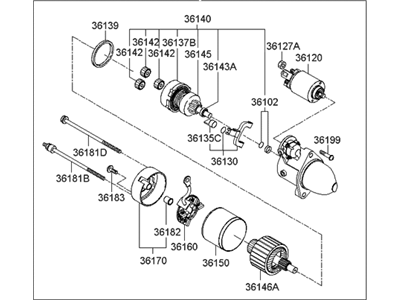

2008 Hyundai Santa Fe Starter Assembly
Part Number: 36100-3C130$532.95 MSRP: $755.35You Save: $222.40 (30%)Ships in 1-2 Business DaysProduct Specifications- Replaced by: 36100-3CA00
- Part Code: 36100A
- Item Weight: 0.70 Pounds
- Item Dimensions: 22.8 x 18.9 x 0.7 inches
- Condition: New
- Fitment Type: Direct Replacement
- SKU: 36100-3C130
- Warranty: This genuine part is guaranteed by Hyundai's factory warranty.
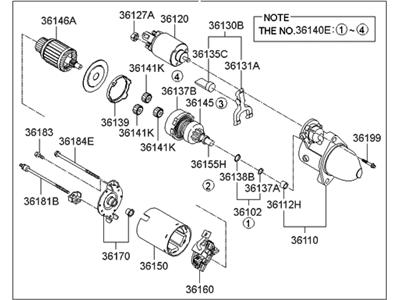

2008 Hyundai Santa Fe Starter Assembly
Part Number: 36100-3C180$396.72 MSRP: $562.27You Save: $165.55 (30%)Ships in 1-3 Business DaysProduct Specifications- Manufacturer Note: MANUFACTURER-REMY MEXICO
- Replaced by: 36100-3C150
- Part Code: 36100A
- Item Weight: 0.70 Pounds
- Item Dimensions: 22.4 x 19.2 x 0.7 inches
- Condition: New
- Fitment Type: Direct Replacement
- SKU: 36100-3C180
- Warranty: This genuine part is guaranteed by Hyundai's factory warranty.
2008 Hyundai Santa Fe Reman Starter Assembly
Part Number: 36100-3C150-RM$106.50 MSRP: $167.13You Save: $60.63 (37%)Ships in 1-3 Business DaysProduct Specifications- Other Name: [Reman] Starter Assembly
- Manufacturer Note: MANUFACTURER-REMY KOREA
- Part Code: 36100A
- Item Weight: 9.00 Pounds
- Condition: Remanufactured
- Fitment Type: Direct Replacement
- SKU: 36100-3C150-RM
- Warranty: This genuine part is guaranteed by Hyundai's factory warranty.
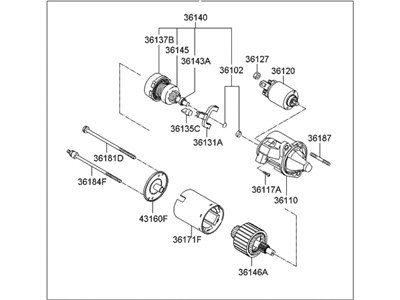
2008 Hyundai Santa Fe Reman Starter Assembly
Part Number: 36100-3E020-RM$103.95 MSRP: $163.55You Save: $59.60 (37%)Ships in 1-3 Business DaysProduct Specifications- Other Name: [Reman] Starter Assembly
- Part Code: 36100A
- Item Weight: 8.50 Pounds
- Condition: Remanufactured
- Fitment Type: Direct Replacement
- SKU: 36100-3E020-RM
- Warranty: This genuine part is guaranteed by Hyundai's factory warranty.

2008 Hyundai Santa Fe Starter Assembly
Part Number: 36100-3E100$303.53 MSRP: $426.45You Save: $122.92 (29%)Ships in 1-3 Business DaysProduct Specifications- Other Name: Starter
- Replaces: 36100-3E020
- Part Code: 36100A
- Item Weight: 9.10 Pounds
- Condition: New
- Fitment Type: Direct Replacement
- SKU: 36100-3E100
- Warranty: This genuine part is guaranteed by Hyundai's factory warranty.
2008 Hyundai Santa Fe Starter Assembly
Part Number: 36100-3E020$303.53 MSRP: $426.45You Save: $122.92 (29%)Ships in 1-3 Business DaysProduct Specifications- Replaced by: 36100-3E100
- Part Code: 36100A
- Item Weight: 9.10 Pounds
- Condition: New
- Fitment Type: Direct Replacement
- SKU: 36100-3E020
- Warranty: This genuine part is guaranteed by Hyundai's factory warranty.
2008 Hyundai Santa Fe Starter Motor
At HyundaiPartsDeal.com, we boast a vast inventory of genuine 2008 Hyundai Santa Fe Starter Motor at unbeatable prices online. Each OEM 2008 Hyundai Santa Fe Starter Motor is backed by the manufacturer's warranty, giving you peace of mind with your purchase. Additionally, our services include a hassle-free return policy and expedited delivery. So, what's holding you back? Start your shopping journey with us today!
2008 Hyundai Santa Fe Starter Motor Parts Questions & Experts Answers
- Q:How to Diagnose and Test a Starter Motor and Malfunctioning Starting Circuit on 2008 Hyundai Santa Fe?Posted by Linda G.A:The starting circuit, where a fault occurs, don't assume that the starter is bad right away. Therefore; have a look at these various items: Make sure that battery cable clamps are clean and tight, inspect battery cables for damage and replace them if necessary, Test the state of charge of the battery and replace it as required, Check starter solenoid wiring & connections, Ensure that starter mounting bolts are tight, Inspect fusible link and repair burned circuits. Verify that Transmission Range (TR) Sensor is functioning properly and check shift lever position. Test Starter Relay located in engine compartment. When you turn ignition switch to start and the starter doesn't engage, check voltage at the solenoid to see if it receives correct signal from ignition switch. If no check fuses and relays in starting system. If voltage is present but starter doesn't work bench test starter. In case vehicle turns over slowly while cranking check cranking voltage and current draw. Voltage ought to be above 8.0 volts (manual)/8.5 volts (automatic), current draw should range between 250-400 amps respectively; otherwise replace the starter if they exceed this level.. Finally if the motor gets power but the motor doesn't crank out remove & bench test the starting/solenoid assembly to identify any solenoid or starter motor problems after confirming that an engine is not seized. The reason behind this detailed examination process can help isolate particular causes of non-starting engines.Answered by Hyundai Parts Specialist Allen / Jan 09, 2026
Related 2008 Hyundai Santa Fe Parts
 2008 Hyundai Santa Fe Alternator
 2008 Hyundai Santa Fe Alternator Bearing
 2008 Hyundai Santa Fe Alternator Pulley
 2008 Hyundai Santa Fe Starter Solenoid
 2008 Hyundai Santa Fe Alternator Brush
 2008 Hyundai Santa Fe Alternator Case Kit
 2008 Hyundai Santa Fe Armature
 2008 Hyundai Santa Fe Starter Brush
 2008 Hyundai Santa Fe Starter Drive Gear