×
- Hello
- Login or Register
- Quick Links
- Live Chat
- Track Order
- Parts Availability
- RMA
- Help Center
- Contact Us
- Shop for
- Hyundai Parts
- Hyundai Accessories


My Garage
My Account
Cart
Genuine Hyundai Excel Clutch Master Cylinder
- Select Vehicle by Model
- Select Vehicle by VIN
Select Vehicle by Model
orMake
Model
Year
Select Vehicle by VIN
For the most accurate results, select vehicle by your VIN (Vehicle Identification Number).
3 Clutch Master Cylinders found
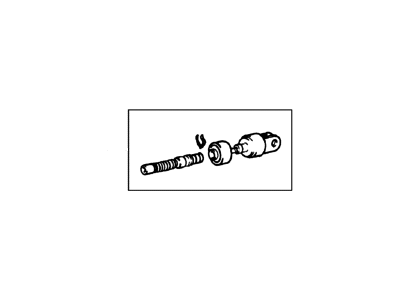

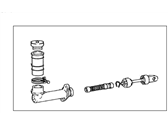
Hyundai Excel Cylinder Kit-Clutch Master
Part Number: 41660-24A00$85.72 MSRP: $120.44You Save: $34.72 (29%)Ships in 1-3 Business Days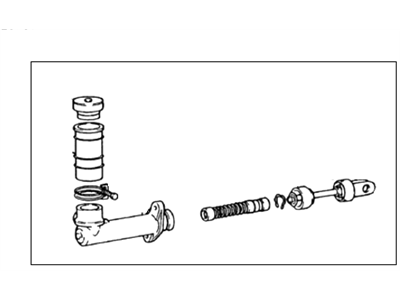
Hyundai Excel Cylinder Assembly-Clutch Master
Part Number: 41610-24055$194.71 MSRP: $273.56You Save: $78.85 (29%)Ships in 1-3 Business DaysHyundai Excel Cylinder Assembly-Clutch Master
Part Number: 41610-24050$194.71 MSRP: $273.56You Save: $78.85 (29%)Ships in 1-3 Business Days
Hyundai Excel Clutch Master Cylinder
The pressure created when the driver presses the Hyundai Excel Clutch Master Cylinder becomes hydraulic pressure that allows the driver to apply less effort and switch gears smoothly. The Clutch Master Cylinder is designed to keep performance solid over thousands of miles thanks to its cast aluminum housing and high temp seals that resist corrosion and leaking. The unit can be fitted without any modifications to any Hyundai drivetrain and will fit into any Excel hatch or sedan from 1985 through the final production year. A precision piston and return spring in the Clutch Master Cylinder provide sharp line pressure, shortening the pedal travel and increasing safety during quick gear changes. A conveniently located bleed port quickly purges trapped air, ensuring firm pedal feel while preventing sponginess that can cause missed shifts. All Hyundai Excel with this Clutch Master Cylinder have a lighter front weight due to its compact reservoir, which is a minor benefit likely to enhance fuel economy. The Clutch Master Cylinder is built to last thanks to the polymer seals selected for their resistance to breakdown at high temperatures, making the Excel nameplate reliable worldwide. Because it was designed with the factory slave cylinders, it will work perfectly on all Excel trims, keeping the synchrony that allows Hyundai gearboxes to function smoothly in daily use. The difference in this pushrod design is the vibration isolation that further isolates engine buzz from the cabin. Many rivals do not offer this feature. Those who look after a classic Hyundai Excel will find that selecting this Clutch Master Cylinder retains the original driving feel yet provides modern confidence at every shift.
If you are looking for affordable high-quality OEM Hyundai Excel Clutch Master Cylinder, then you have come to the prime place. Our website provides a large amount of genuine Hyundai Excel Clutch Master Cylinder at unbeatable prices. All our parts come backed with the manufacturer's warranty.
Hyundai Excel Clutch Master Cylinder Parts Questions & Experts Answers
- Q:How to disconnect and remove the clutch master cylinder on Hyundai Excel?Posted by Aimee A.A:Disconnect the negative cable from the battery. For 2011 and earlier models, raise the vehicle and support it securely on jackstands. Loosen the bleed plug on the release cylinder and place a drain pan under the bleeding plug. Apply the clutch pedal several times to force the hydraulic brake fluid out of the system. Continue to apply the clutch pedal until all fluid is expelled. Tighten the bleed plug securely. Caution: Don't allow hydraulic brake fluid to come into contact with paint as it will damage the finish. Disconnect the hydraulic line at the master cylinder. Have a small can and rags handy, as some residual fluid will be spilled as the line is removed. Working inside the vehicle, remove the cotter pin, washer, and clevis pin. Disconnect the pushrod from the clutch pedal. Working in the engine compartment, remove the nuts securing the master cylinder to the firewall and remove the master cylinder. For 2012 and later models, working in the vehicle under the dashboard, disconnect the push rod from the master cylinder by removing the snap pin and washer. Remove the four clutch pedal mounting nuts and pull the pedal assembly slightly forward. Remove the battery and the ECM. Working in the engine compartment, disconnect the release cylinder line and the reservoir hose from the clutch master cylinder. Remove the clutch master cylinder by turning it clockwise and pulling it from the firewall. Installation is the reverse of removal. Tighten the clutch master cylinder mounting bolts/nuts securely. Be sure to bleed the system.Answered by Hyundai Parts Specialist Wilson / Feb 12, 2024